
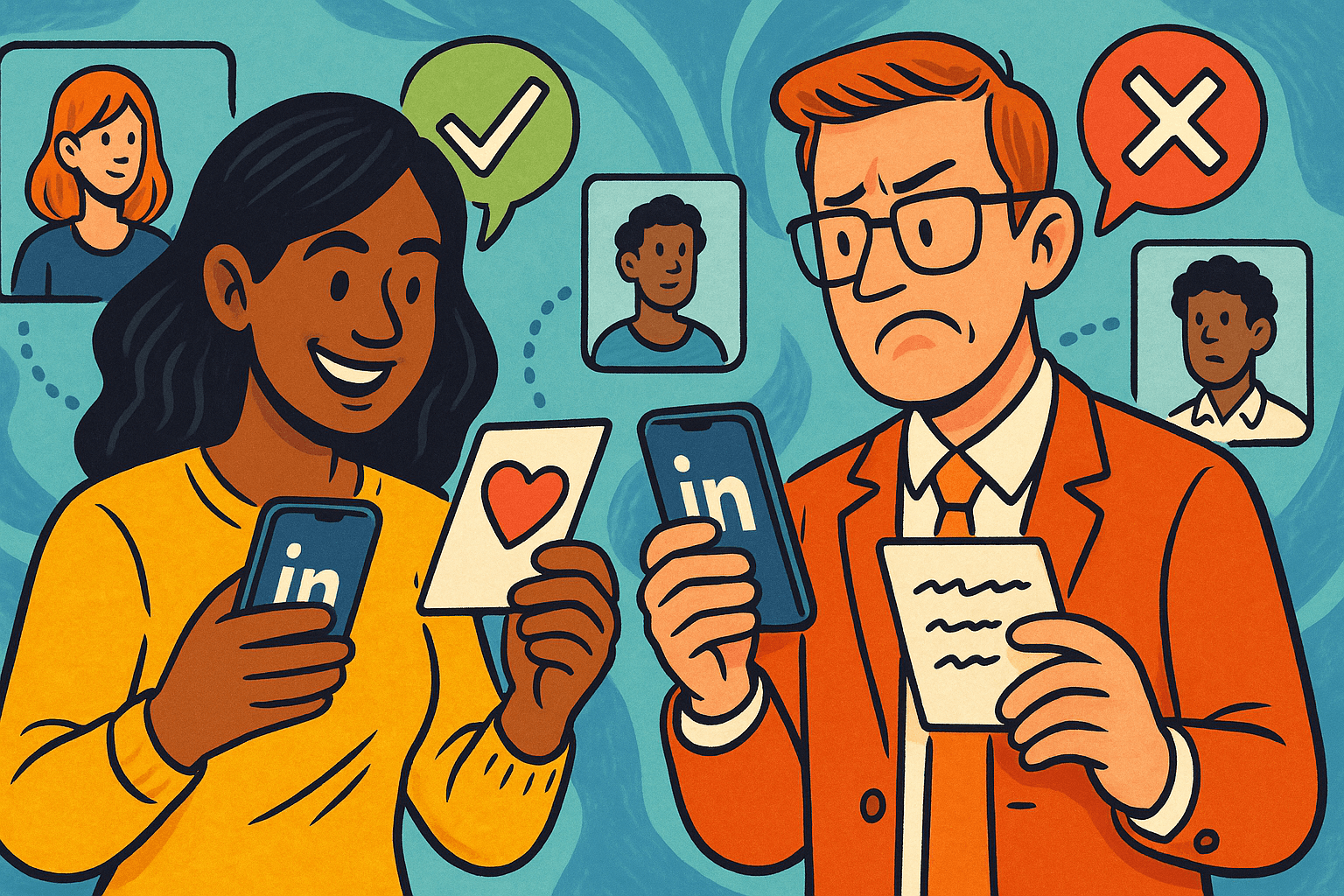
Sending personalized connection invitations has become a crucial practice for effective networking in the digital world. According to a LinkedIn report, users who personalize their invitations are 47% more likely to have them accepted compared to those who send generic invitations. However, there are recommended practices and common mistakes to avoid when trying to expand your professional network through personalized invitations.
Personalization begins with research. Try to understand who the person you are trying to connect with is. Visit their profile and look for common interests, shared connections, or involvement in similar projects. Research conducted by ITSM Tools indicates that 76% of professionals are more inclined to accept invitations when they perceive that the person on the other end has taken the time to get to know them beforehand.
In the invitation message, be concise and direct. Avoid lengthy text that may discourage reading. According to the Journal of Marketing Research, objective messages with a maximum of 200 words are most effective in capturing the attention of busy executives. Mention the reason for the connection, whether it be a shared interest or common event, using professional and friendly language.
The structure of the message matters. Start with a friendly greeting using the recipients name and follow with a clear reason for the connection. For example: “Hello, [Name], I noticed that we both attended [Event] and would love to connect to share insights.” This approach was recommended by the Harvard Business Review, which highlighted that contextualized and respectful messages increase the positive response rate.
A common mistake is asking for something right from the start. According to networking experts like Ivan Misner, founder of BNI, “Networking is not an opportunity to sell, but to build relationships.” By immediately asking for something like a referral or meeting, you risk conveying a short-term transactional approach, deterring potential contacts.
Additionally, avoid giving the impression of "copy and paste," where the message seems generic and lifeless. In a survey by Trustradius, 62% of users reported rejecting invitations based on standardized and impersonal language. Paying attention to specific details, such as recent projects or posts made by the contact, can avoid this pitfall and ensure a warm and personalized message.
Therefore, the success of personalized connection invitations lies in a balance between careful personalization and mutual respect in communication. A person-centered approach, rather than an immediate objective, not only allows for richer and more meaningful connections but also opens doors for long-lasting and productive collaborations.