
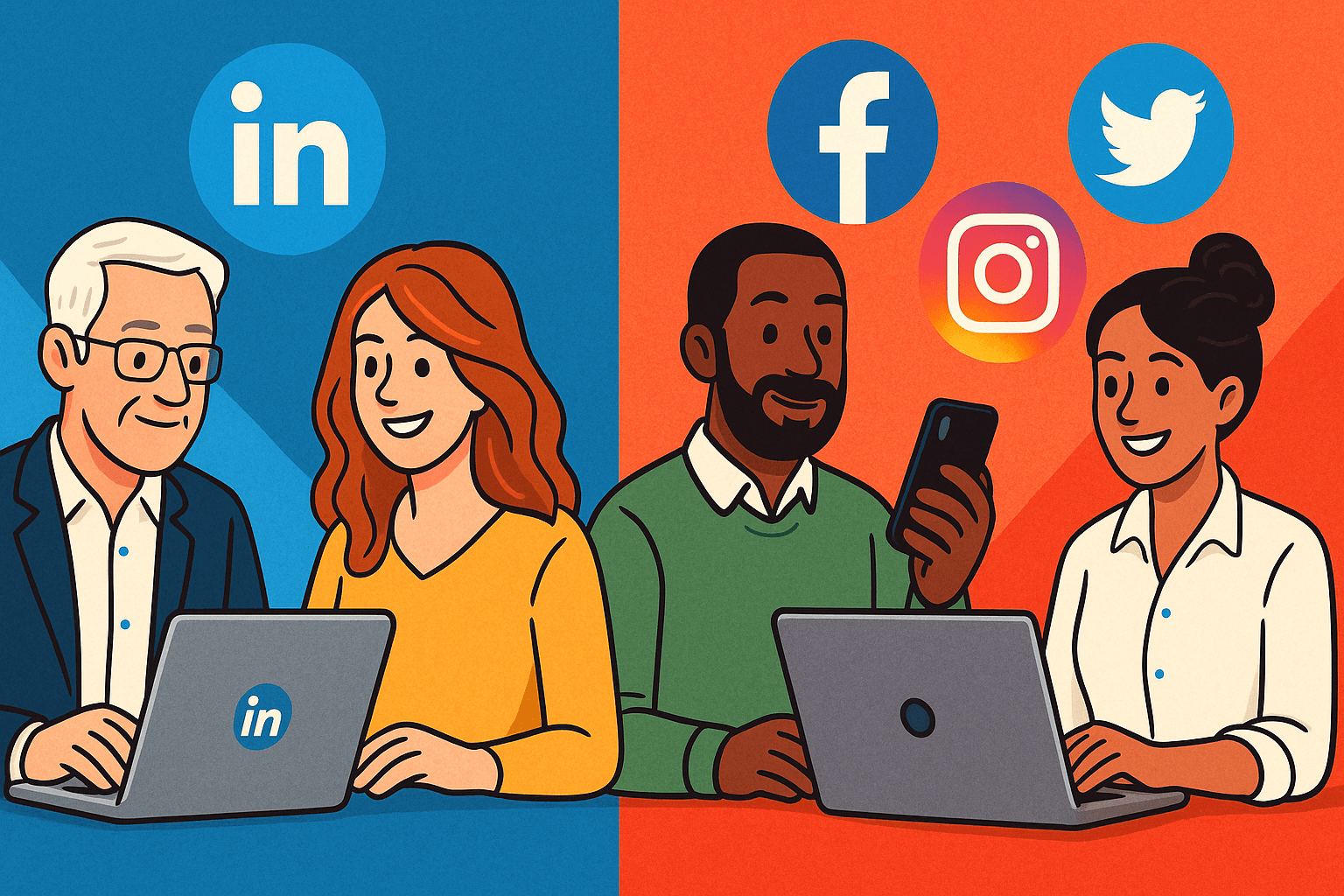
Maintaining consistency on social media is a constant challenge for marketing managers, especially when it comes to adapting content for diverse platforms like LinkedIn and other social networks. LinkedIn, with its 950 million users in 2023, according to Statista, requires a more professional and business-focused approach, while platforms like Instagram and TikTok prioritize visual and dynamic content.
A central aspect of ensuring an effective presence across all these networks is understanding the audience of each one. Data from Hootsuite highlights that 61% of LinkedIn users are between 25 and 34 years old, generally decision-makers or professionals seeking new opportunities. In contrast, TikTok, dominated by 32.5% of people aged 10 to 19, is geared towards fast-paced entertainment and creativity. This requires not simply copying and pasting content but adapting it to maintain relevance and consistency.
An example is the approach of brands like HubSpot. In their content strategy, the company replicates the central theme of their campaigns but alters the format and language to suit each platform. On LinkedIn, detailed articles and infographics are commonly used, while on Instagram and TikTok, short videos and illustrated stories are incorporated.
Effective content adaptation strategies should also consider the difference in format and timing between platforms. LinkedIn recommends sharing important content during the workweek, taking advantage of business hours. Meanwhile, on Instagram, posts over the weekend may yield better engagement, as pointed out by research from Sprout Social.
Its important to remember that the quality of content should prevail over quantity. In a study conducted by the Content Marketing Institute, 63% of marketers stated that audience feedback is one of the main guides for content production. Monitoring and evaluating engagement on each network can highlight what works best and adapt future strategies based on tangible data.
Finally, brand and message consistency should be maintained through a well-crafted style guide. LinkedIn, with its more formal nature, should continue to reflect the companys mission and vision in an educational and informative manner, while other networks may allow for a more creative and spirited approach, as long as it remains aligned with the brand identity.
In summary, the effectiveness of a marketing manager lies not only in creating but especially in adapting content so that, even on different platforms, they maintain the essence and global objectives of the brand. With this, it is possible to maximize impact and ensure that the companys digital presence remains relevant at all times.